MPB x Foam Talent Studio Visit: Nad E Ali
Studio Visit offers a look at the artistic practices, workspaces, and latest projects of contemporary photographers. For this collaboration with Europe's top camera reseller, MPB, Foam curators take a closer look at the practices of five 2026 Foam Talents.
Jilke Golbach: You are based in Lahore, Pakistan, where you were born and raised. Your different bodies of work – including the series Horse / Men, which is currently on display at Foam, bear a strong connection to your immediate environment, whether you are looking at ritual processions (the Zuljanah), the layered histories of the city streets, or intimate relationships of love and friendship. Do you remember why and when you were first drawn to the medium of photography, and how photography shapes your relation to Lahore (and vice versa)?
Nad E Ali: I was born and raised in Lahore. My grandparents came to the city carrying a difficult history and built a new life here. My father was a wrestler and later sold kebabs on the streets of Lahore, raising us with very humble means. My grandmother, who was a deeply spiritual woman, named me through the prayers and blessings of Bibi Pak Daman, one of Lahore’s most revered and rare female saints, whose shrine has long held a special place in the spiritual and cultural life of the city. In many ways, I think I grew up with an unconscious inheritance of this feminine spiritual presence, carried through my grandmother and the stories, prayers and rituals around me.
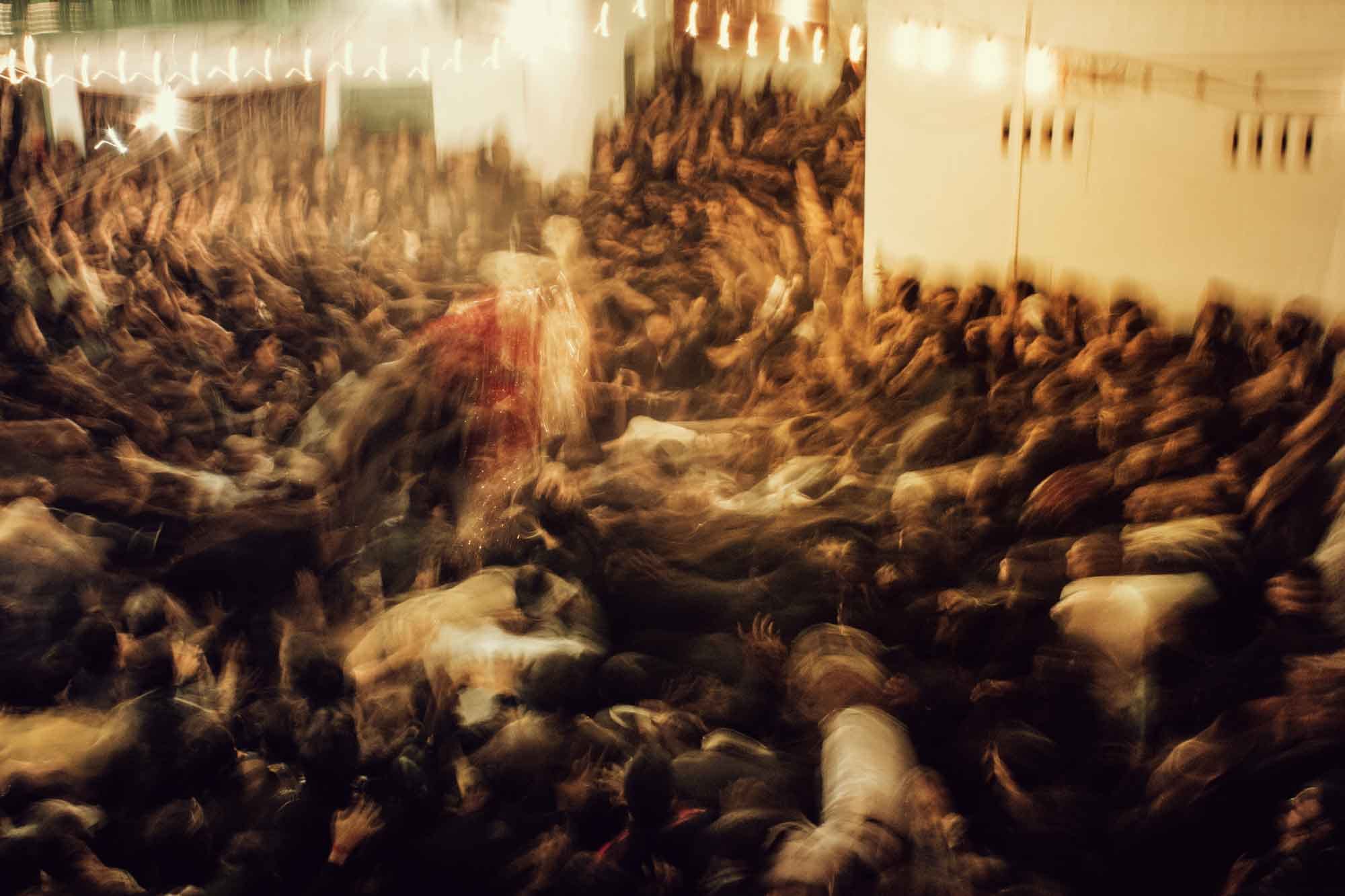
I grew up in a small neighbourhood in Lahore in the 1990s, surrounded by the rhythms of the city and its festivals. I listened to qawwalis [a form of Sufi devotional music], visited shrines, attended Muharram majalis [religious gatherings held by Shi‘i Muslims], and experienced the many celebrations and rituals that shaped everyday life. My father first took me to see the Zuljanah [a symbolic representation of the horse that belonged to Imam Husayn ibn Ali, grandson of Prophet Muhammad in Islam], and I remember sitting on his shoulders, reaching out to touch its forehead and receive its blessing. These experiences became an early language through which I understood love, faith, devotion and community.
My family also carried memories of loss and displacement, and growing up, I became aware of the quiet tensions that can surround faith and belonging. These things were not always spoken about, but they became part of the emotional landscape through which I learned to understand the world.
My grandmother later disappeared from our lives, and we never had the closure of knowing what happened to her. Years later, my father's death brought another profound absence. I think these experiences made me look for traces of people I have loved in the world around me. Lahore became a landscape through which I could process love, grief, loneliness and memory. My first encounter with photography came when I saw an interview with a photographer whose images of Lahore and its people filled me with wonder. Coming from a working-class family with no artists in it, finding my way towards art school and photography was itself a struggle. The camera made me realise that photographs could be imagined, constructed and felt – that, in some way, feelings could also be drawn through images.
JG: What does your studio or workspace look like (if you have a physical one), and what are you working on there at the moment?
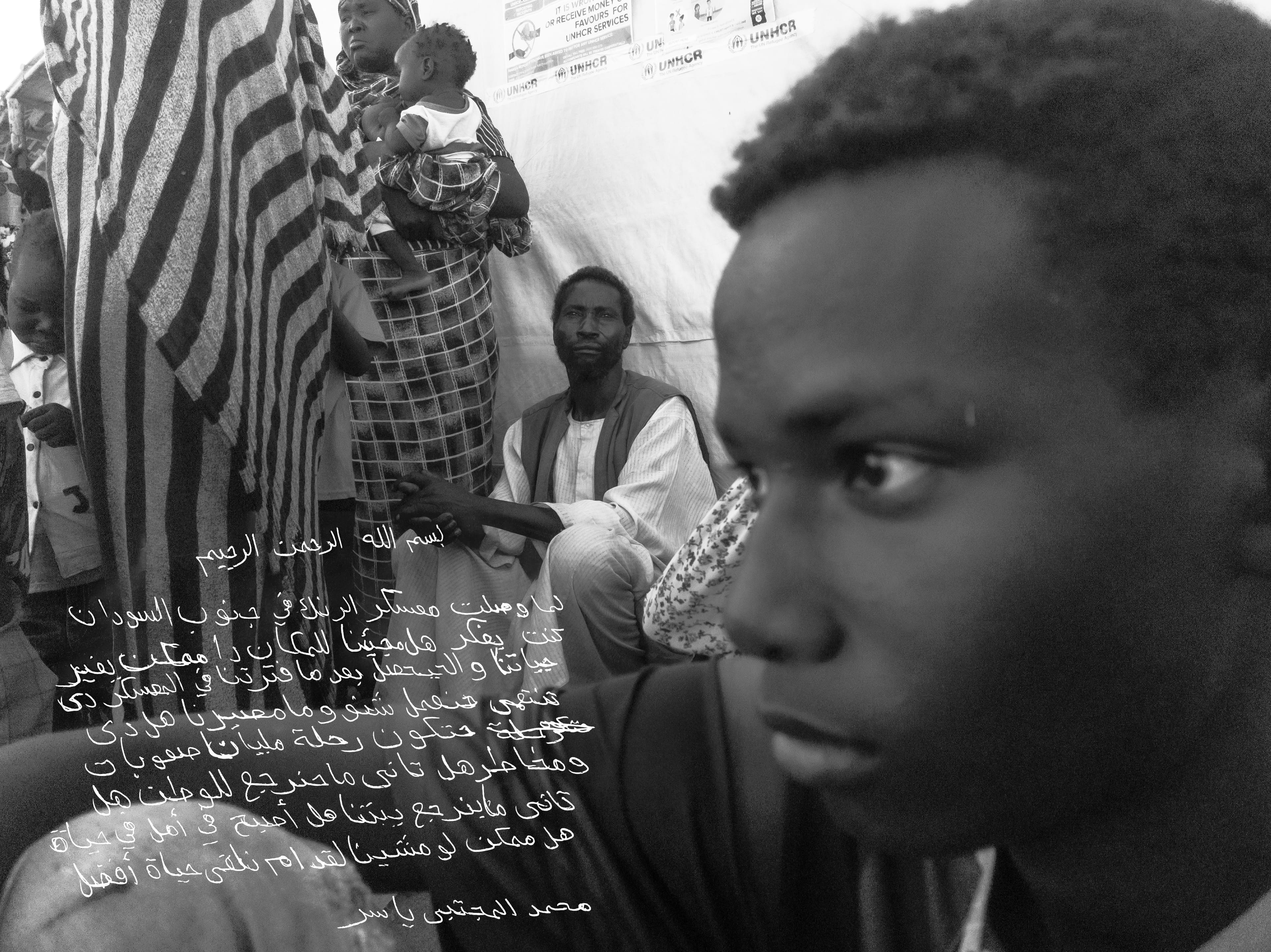
NEA: I don't have a fixed studio. I mostly work from a room in my home that was once badly damaged by fire and that I later rebuilt. It has gradually become a place where I collect and live with things I encounter across Lahore: found photographs, objects, music-related materials, old cinema posters and other fragments that catch my attention.
My walks through the city, whether through cemeteries, shrines, old streets or spaces connected to ritual, often become an extension of this workspace. I am currently working on my first photobook, Maqtal, an immersive exploration of Shi‘i devotional practices and the Zuljanah processions in Lahore that I have been documenting since 2014. Alongside this, I am developing You Aren't Like Anyone Else, an ongoing project rooted in my family archive and my late father's memory, looking at the entanglement of family, love, loss and remembrance.
JG: Your artistic practice incorporates not only photography, but also archival materials, text, sound, and found objects. A project like Horse/Men has come together over many years. How do you begin a new project and at what point do you start thinking about what shape and form it might take (such as a book or exhibition)?
NEA: My projects usually begin with something I cannot quite let go of: a feeling; an image; a memory; a place or a question that continues to return. I rarely begin with a predetermined outcome. I photograph, collect, record, write and revisit things over long periods of time, allowing connections to emerge gradually.
The form of a project often reveals itself through this process. Sometimes the photographs ask to exist as a book; sometimes they need sound, archival material, objects or text to complete the story. I think of editing as a way of thinking, rather than simply selecting images. I am interested in how images speak to one another, what is left unsaid between them, and how a sequence can create a different kind of memory. Because my work often develops over many years, the final form is also shaped by time itself. I allow the project to tell me what it needs to become.
JG: You work across both analogue and digital processes. What type of camera equipment do you use, and how important is this to you? Does your equipment change with every project?
NEA: Yes, I work across both analogue and digital processes. I am currently working primarily within the Fujifilm ecosystem, using both 35mm and medium-format cameras, depending on the project and how I previsualise the work.
My equipment changes according to what each project requires, and I enjoy exploring the particular character of different formats. I often find myself drawn to inexpensive cameras I discover at flea markets. There is something I love about the fragility and imperfection of analogue photography: the unexpected incidents, mistakes and accidents that become part of the image. It reminds me of life itself, which rarely unfolds exactly as planned.
For me, the camera is ultimately a tool rather than the centre of the work. What matters is how a particular medium allows me to approach a feeling, a memory or a way of seeing.
JG: Collaboration and exchange are an important part of your creative practice, not just with the people and communities you photograph, but also with fellow makers. Can you tell us a bit about the photography scene in Pakistan and your initiative Tasveer, Pakistan’s first independent photo zine publication?
NEA: I began making and publishing small handmade zines around 2018, partly in response to the isolation I felt and the lack of an independent photography and publishing culture in Pakistan. Tasveer came later, growing from the same desire to create a space where photography could be shared, seen and experienced in tangible form.
Through Tasveer, I wanted to build a platform for independent photographic voices, particularly those that may not find space within conventional galleries or institutions. We focus on local stories and sustained photographic practices, while also creating connections with artists across South Asia. In Pakistan, there are still relatively few platforms dedicated specifically to photography, its publishing and its critical discourse.
For me, Tasveer is also about creating an exchange for artists to self-publish, self-curate and circulate their work beyond institutional structures, while building a community around photography and supporting one another.
JG: What are you looking forward to next?
NEA: I am looking forward to making and publishing more books large and small, and continuing to build a small, living collection of photobooks, zines and publications around me. I also want to keep creating spaces where my fellow photographers and artists can gather, share their work, exchange ideas and support one another.
I think we are constantly at risk of forgetting our own stories, the stories of our families, our communities, our struggles, our tenderness and our love. I want my work, and the spaces I help create, to keep those stories alive in some form. There is still so much I want to explore, photograph and publish. For me, the future is about continuing to look closely, to listen, and to find ways of making images and books that can carry these stories forward.
This Studio Visit is made in collaboration with MBP.
About the artist
NAD E ALI is an artist based in Lahore, Pakistan. His practice moves between photography, sound, and archival materials, engaging with personal and collective memory. The artist’s ongoing initiative, Tasveer, supports independent photographic voices throughout South Asia. His work has been presented internationally, including at Lumenvisum, Hong Kong (2024), Platforms Project, Athens (2025), and Printed Matter’s NY Art Book Fair, New York, among others.
About the author
JILKE GOLBACH is Curator & Artistic Team Lead at Foam, Amsterdam, where she curates exhibitions of historic and contemporary photographs, including Martin Parr: Very Modern and Rather Ugly (2026), Verena Blok: Love Shit (2026) and Augusta Curiel (2025). She previously held curatorial positions at the London Museum, Barbican Art Gallery, and Rijksmuseum. She has published widely on art and photography, including in titles such as Great Women Photographers (2026), Vitamin V: Video and the Moving Image in Contemporary Art (2025), Fracture: Ecology. Time. Humanity (2023), and or 1000Words and Foam magazine. She holds a PhD from University College London, and has a specific interest in art and photography at the intersection of personal narratives and systemic critique.
About MBP
MPB empowers creators to tell their stories by making pre-owned photo and video equipment more accessible. Whether buying a first camera, upgrading a kit, or giving used gear a second life, MPB makes it easy to buy, sell, and trade equipment. Through its collaboration with Foam Talent 2026, MPB supports the next generation of image-makers, helping emerging photographers share their work with audiences around the world and opening up new creative possibilities.