In Conversation with Paola Jiménez Quispe
Paola Jiménez Quispe is a Peruvian photographer and archivist. In 2022, she published the photobook titled Reglas para pelear (Rules for Fighting, 2022) in which she explores the lasting impact of the murder of her father. In this interview, Paola sits down with writer and curator Diego Chocano to talk about the project, her interdisciplinary practice and her plans for the future.
DC: Congratulations on being selected as one of Foam Talents. Tell me a little bit about that – the process and what the prize means to you.
PJ: When you apply you have to send your portfolio, they then decide which body of work will be shown in the exhibition. I presented two projects, one that I finished a few years ago and an ongoing body of work. My projects always take a long time to materialise – they usually take over five years to complete so I do not have that many finished bodies of work.
DC: I imagine this arduous process is related to the hybrid nature of your work. Your photographs ultimately become a part of a larger project. Your practice also involves archiving and bookmaking and you have recently started making mixed media installations in gallery settings.
All of these aspects of your practice tend to involve, or culminate in, material objects. With this in mind, I am interested in your decision to use analogue cameras instead of shooting digitally. Have you always worked like this?
PJ: My first encounter with image making was at university. I had to take a compulsory photography class which, at the time, taught analogue photography. I found it much more interesting than shooting digitally. I think at first it came from a curiosity towards materiality.
I then began experimenting with toy cameras because I felt a lack of control—there is an inherent sense of chance in analogue photography. I felt this mirrored the way my emotions work, in a way, or at least the way they functioned at the time. I found my inability to completely control the image very valuable because I linked it to the fact that I, at that moment in time, did not feel in control of my feelings. I was beginning the project about my father’s murder and I was trying to decipher how I wanted to explore it. If I even wanted to explore it at all. It was the first time I really processed it.
DC: This ability to relinquish a degree of control feels so important in your work. Your images never feel staged; they are charged with a sense of your unique subjectivity. They feel distinctly yours, deeply personal. The film’s grain gives your images a warmth in tone, a sense of nostalgia—your photography books evoke family photo albums.
PJ: I often find when I think too much before taking a photograph, I end up not liking it. This is another reason why my process takes so much time; the images need to come to me naturally—I rarely go out looking for them. I try not to control my images too much, again, because of this intimate link between the image and my own emotional register.
DC: And these photographs, which like you say rely to a certain extent on chance, you then use for a larger purpose; you create narratives with them in your photobooks. I also find it fascinating how in books like Reglas para pelear (Rules for Fighting, 2022) you mix your own photography with your father’s photography as well as other found objects from a personal archive of his belongings. There is a porousness in terms of authorship—as if you co-produced the book together.
PJ: The first ‘archive’ I found did not consist of images. When my father was murdered, he had a few objects in his pockets. When the police gave them back to my mother she stored them away for several years. I found some of these objects—legal documents, his ID. Slowly I began to find more—his clothes, a perfume… Around 2016 I found several rolls of undeveloped photographs he had taken and I slowly got them developed. Even then, I had no idea that they would all end up in a book together—in fact, back then I kept my work and these objects very separate. Where I was studying, we were never encouraged to mix media. It took a lot of effort for me to get rid of these rigid structures in my mind.
It was not until I went on a residency to Latvia that I met other artists working across disciplines. I met Jean Russell, a Belgian photographer, and Yumi Goto, a curator and editor, who encouraged me to think of mixing some of my father’s archives with my photographs.
I was invited to a workshop in Tokyo to develop this project and it was there that I realised the importance of narrative. I realised that what matters most is the story you want to tell—the individual pieces then slot into the narrative. With Reglas para pelear, I wanted to tell the story of my parents falling in love, about his murder and about how it affected our family. Having a clear narrative structure meant I knew where there were pieces missing, where I needed to do more research.
For three or four years now I have felt that photography is not enough to tell an entire story. I need more—whether that be found objects, drawings, paintings, video. That is the direction my work has been heading in the last few years. The narrative drives the media that I use.
DC: With this idea of where your work is headed in mind—what are you working on now?
PJ: I am working on a new project that is taking a lot of mental effort. I’m working on a project that is about sexual abuse within families. For the last five years, I have been speaking with family members who experienced this. I’m exploring the idea of silence and how it functions to obfuscate these narratives which are often not the dominant narratives in family histories. My family is from the Andes, from Cuzco, and there are certain things you learn—I think in all of Latin America—to respect your family, to remain silent for the greater good of the family, to respect gendered dynamics of power.
DC: Are you working with other media beyond photography? Is the idea to turn it into a book?
PJ: I have so much material—I’m not restricting the type of material I can use. I do not know if it will end up being a photography book—I’ve been thinking about it in that format but that does not mean it will not end up in some other format. Let’s see what happens when I finish it. If I finish it.
About the artist
PAOLA JIMÉNEZ QUISPE is a photographer and archivist based in Lima, Peru. Her work revolves around memory and trauma, with a belief that individual stories reveal universal struggles. Jiménez works across various media, including photography, text, documents, video, and painting. Her photobook Rules for Fighting was published by Witty Books and Images Vevey in 2022. She was the winner of the Images Vevey Special Jury Prize in 2021, a finalist for the Aperture Photobook Award in 2022, and a recipient of the Bird in Flight Prize, 2020 and POY LATAM, 2025.
About the author
DIEGO CHOCANO is a curator from Lima, Peru, currently based in London. He is Assistant Curator at Barbican Art Gallery, London, and has held similar positions at Tate Britain and the University of Essex, where he was also a researcher and lecturer. He has curated exhibitions internationally in England, Scotland and Chile. His writing has featured in outlets including Afterall, Burlington Contemporary, Artishock Revista and MAP Magazine, and in publications for major art exhibitions including Beatriz González (Barbican Art Gallery, 2026), Unravel: The Power and Politics of Textiles in Art (Barbican Art Gallery, 2024) and Foreigners Everywhere (60th Venice Biennale, Italy, 2024).
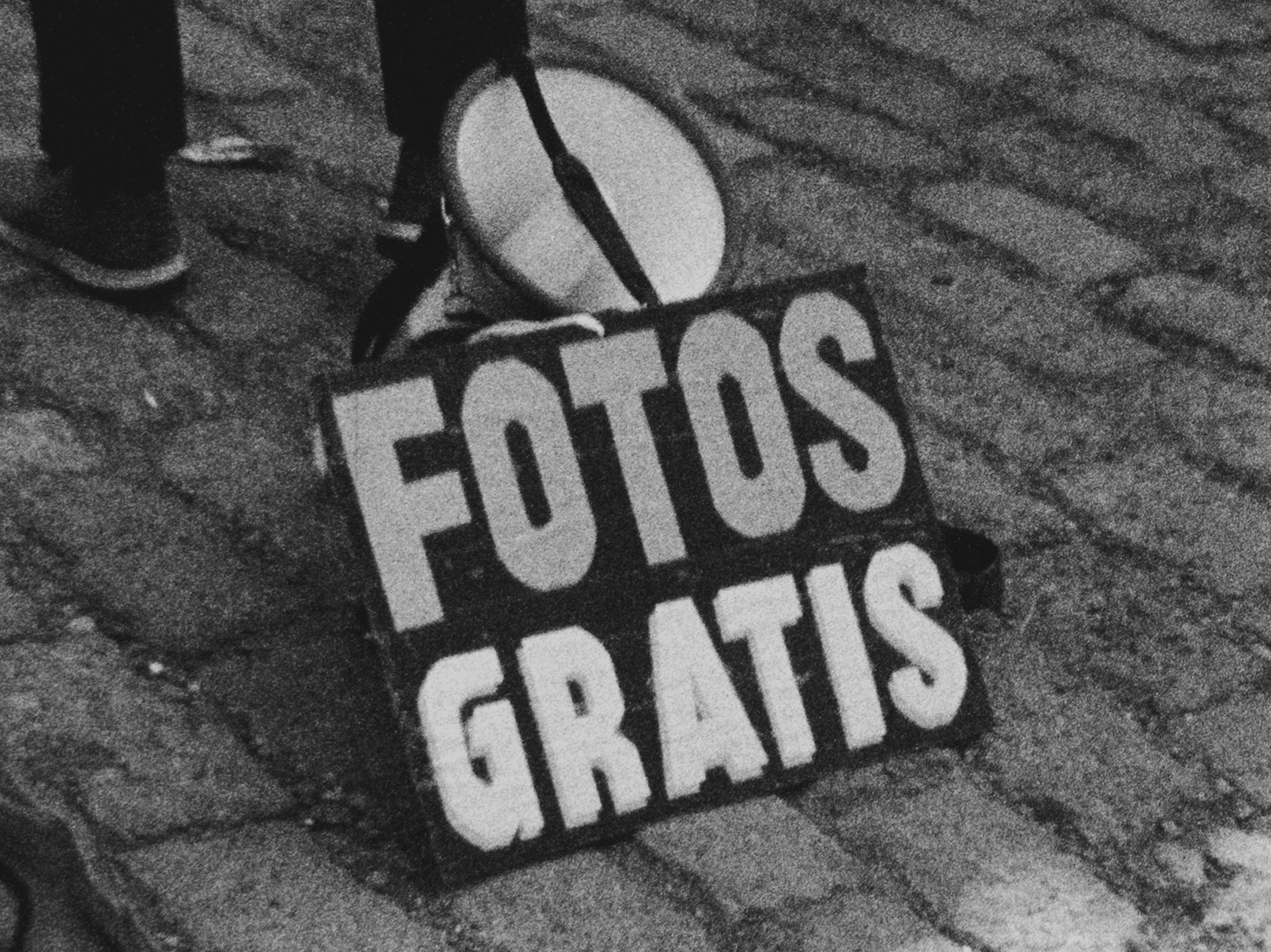
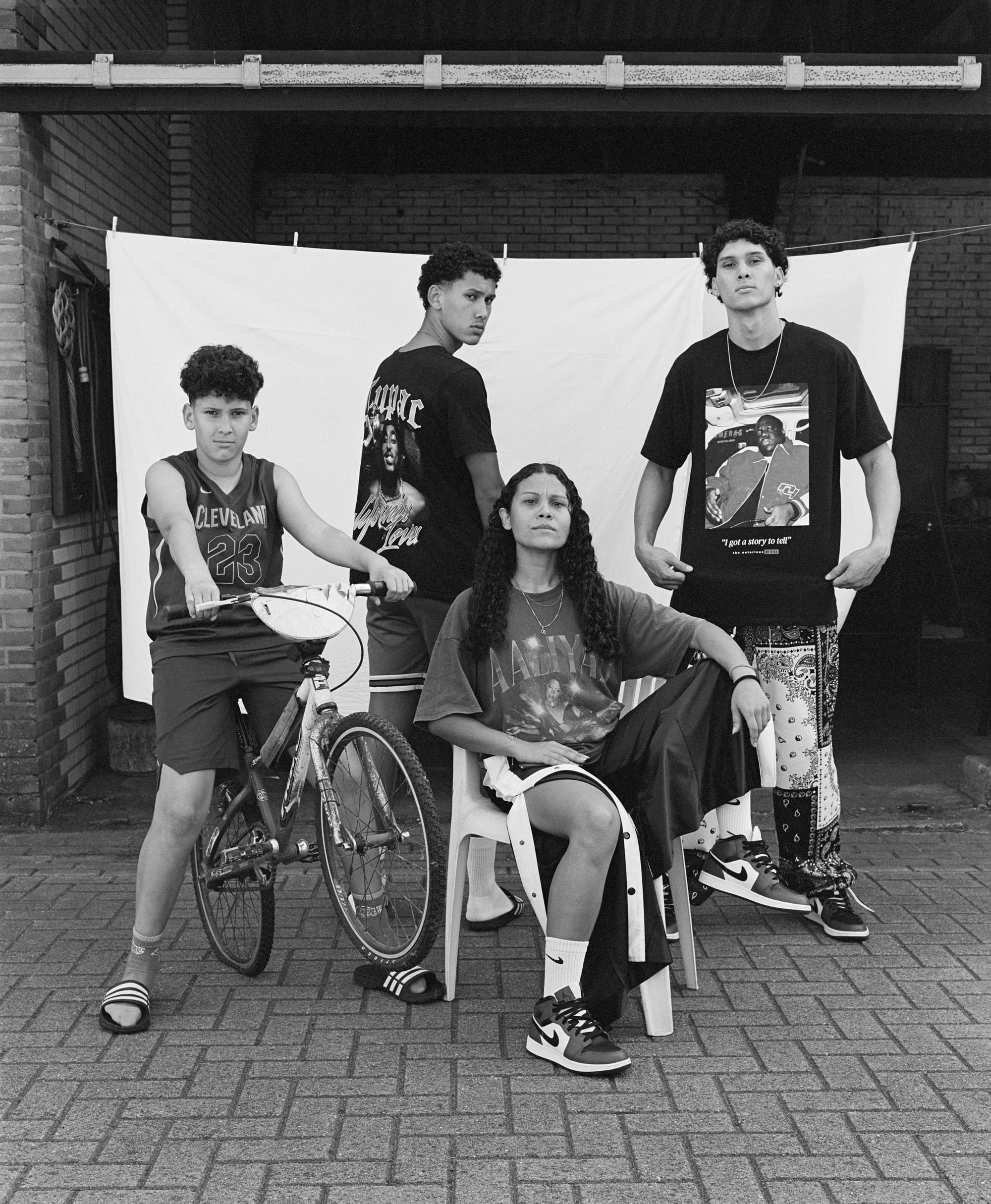
All images by Paola Jiménez Quispe. Courtesy of the artist