Are we seeing the full picture?
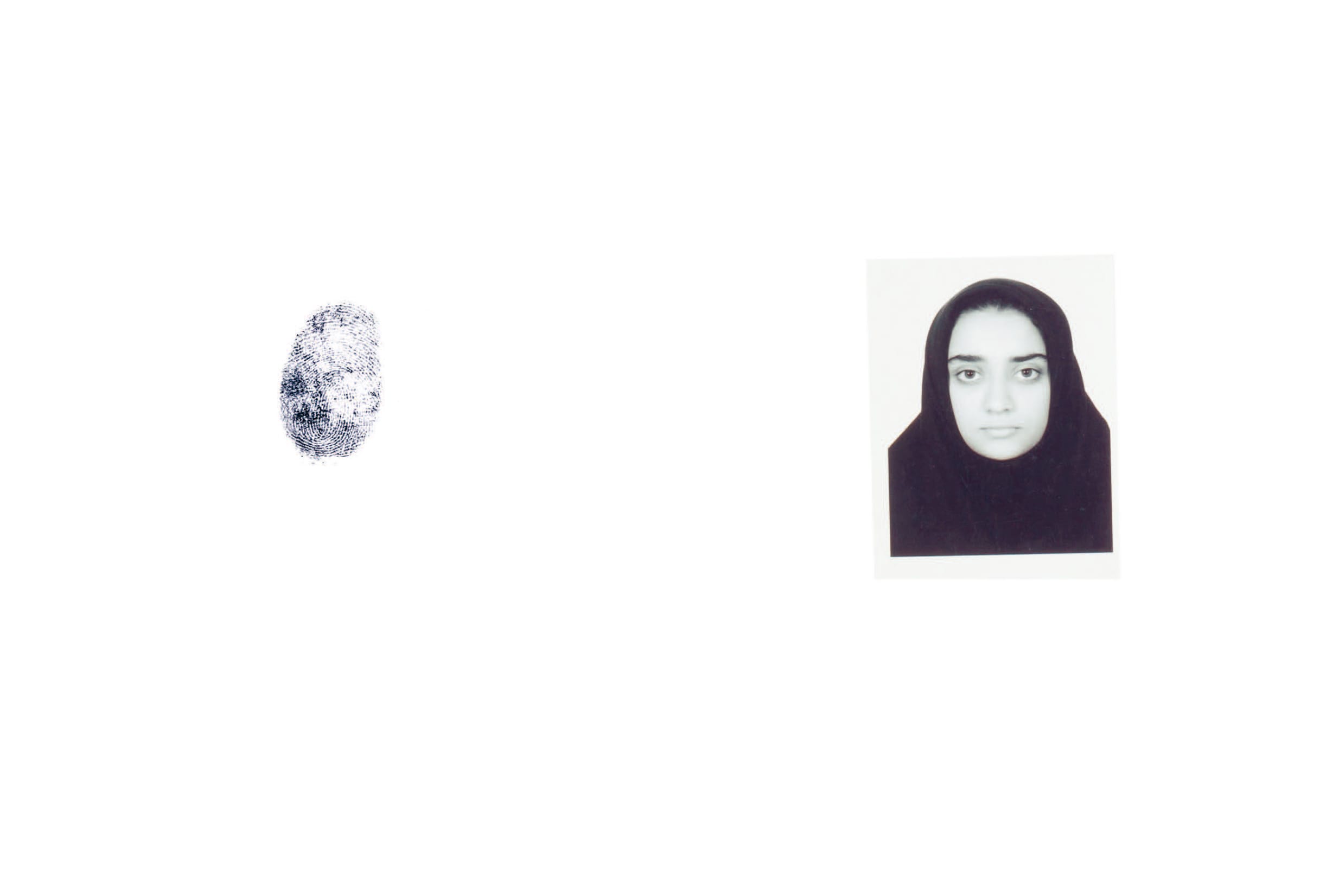
The contemporary framing of Iranian society often gets flattened in media and news. In this feature Foam curator Aya Musa looks beyond the framing by reviewing the photobook Telex Iran, created in 1979 by Magnum photographer Gilles Peress. His images remind us of a long history of protest, fragmentation and transformation which shaped the country we know today. Photography here is used as a tool to create a more layered and nuanced image of society, showing us how the past continues to inform the present.
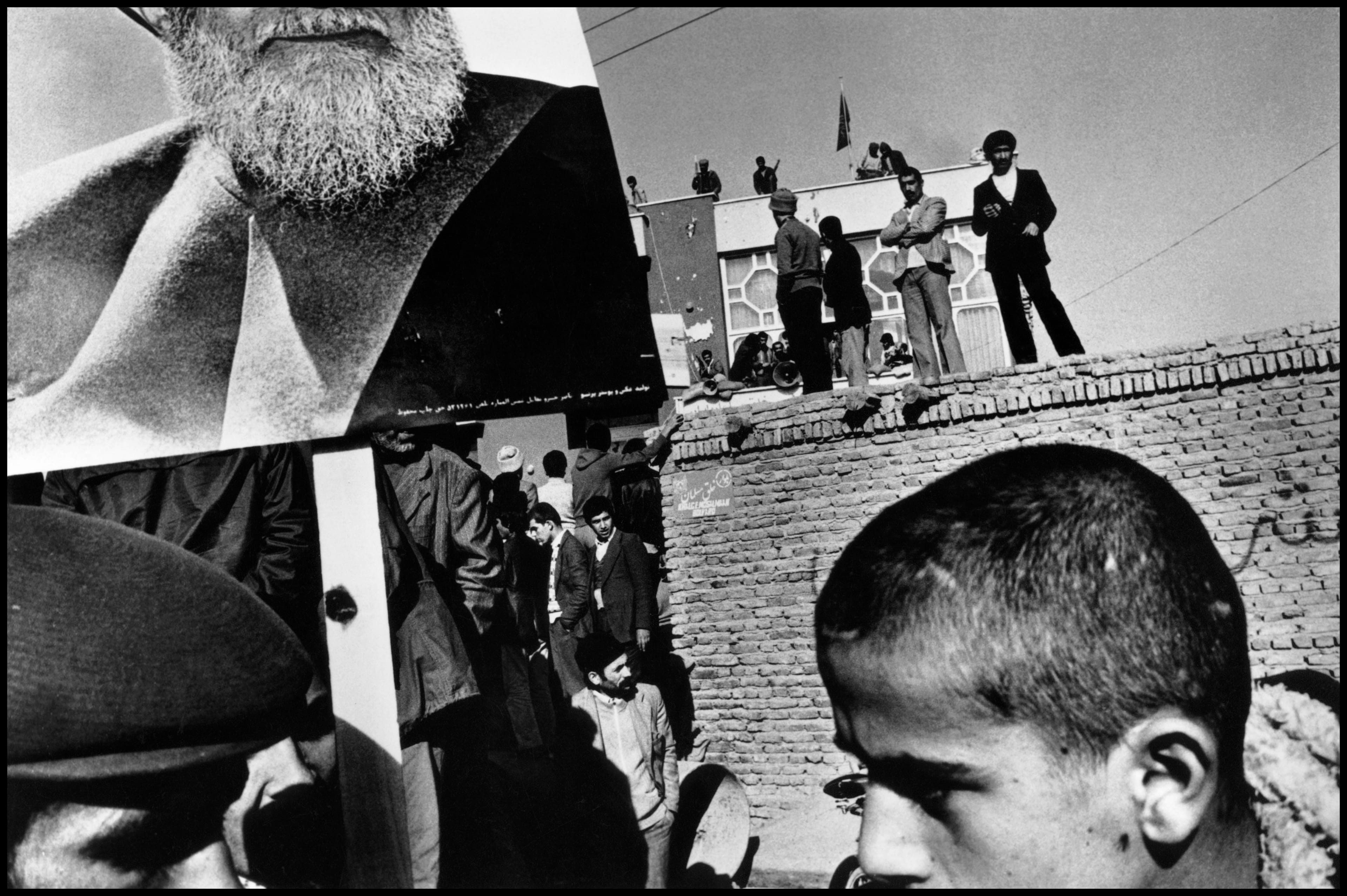
Telex Iran by Gilles Peress is about the Iranian Revolution, a process that began in 1978 and led to the fall of the Shah in 1979, followed by a struggle over what the new Iran would become. The book was photographed in late 1979 and early 1980, in the period after students seized the US Embassy in Tehran and took 66 Americans hostage, 52 of whom remained in captivity for 444 days, an event that came to dominate Western coverage of Iran. Peress refuses to let that single event define the country. His photographs move from Tehran to Tabriz, from prisons to streets, from clerics to addicts, from mourning to political argument. What appears is not a unified nation speaking with one voice, but a country formed through frictions between institutions, memories, local loyalties, media systems, class positions, and state violence. Iran is not presented as a fixed entity but as something continuously in formation.
This is where Telex Iran becomes radical. The series does not treat repression, protest, religion, the state, or the people as separate and stable categories. It shows how they take shape through connections. Peress includes traces of the Shah’s secret police, public archives of victims, funeral processions, poverty, addiction, arms trade, television images, rival clerical authority, and contested public space. Power does not sit in one place. It emerges through links between institutions, infrastructures, images, and historical processes. The structure of the book reinforces this. It is non-linear and multivocal, which prevents the revolution from being reduced to one explanation or one ideological frame. Instead of a single storyline, the viewer encounters overlapping realities that do not resolve into one clear meaning.
That is also what Telex Iran clarifies in relation to the current war involving Iran and the wider Middle East. Much of today’s media framing returns to a narrow script in which Iran is reduced to threat, regime, missiles, and geopolitical danger. This produces a flattened image that obscures how events are produced. Peress’s work points in another direction. It shows that what is presented as a single act or a single actor is always tied to a wider network of histories, infrastructures, economic pressures, political rivalries, and media constructions. A missile, a sanction, a headline, or a military action does not stand alone. It is part of a configuration that stretches across borders and over time. The force of Telex Iran lies in breaking the assumption that a country can be understood as one voice or one intention. It redirects attention to how situations are assembled, rather than accepting the simplified images that dominate moments of war.




About the artist
GILLES PERESS is a Magnum photographer known for long-term documentary work on conflict, political violence, and social upheaval. Peress approaches photography as an investigative practice, often structuring his books as non-linear sequences rather than conventional journalistic narratives.
Telex Iran (1984) documents Iran in the immediate aftermath of the 1979 revolution, based on photographs made during the period of the US Embassy hostage crisis. The title refers to the telex transmissions Peress sent while working in Iran. The book is considered an influential example of late twentieth-century documentary photography, particularly for its departure from the conventions of the illustrated press and its use of a fragmented, multi-perspectival structure.
About the author
AYA MUSA is a curator at Foam. Prior to this, he was a curator and head programmer at the Nederlands Fotomuseum. In his work, Aya combines social developments with new exhibition forms, where photography is not subordinate to the context from which it arises, but at the same time never loses sight of this context. In this way, he gives photography a stage that goes beyond existing clichés. Since 2001, he has combined his work in the Netherlands with empirical ethnographic research into the Middle East and the Indian subcontinent. Currently, Aya is studying the photographic representation of victims of sectarian violence in the region.
All images from the series Telex Iran © Gilles Peress, courtesy of the artist and Magnum Photos