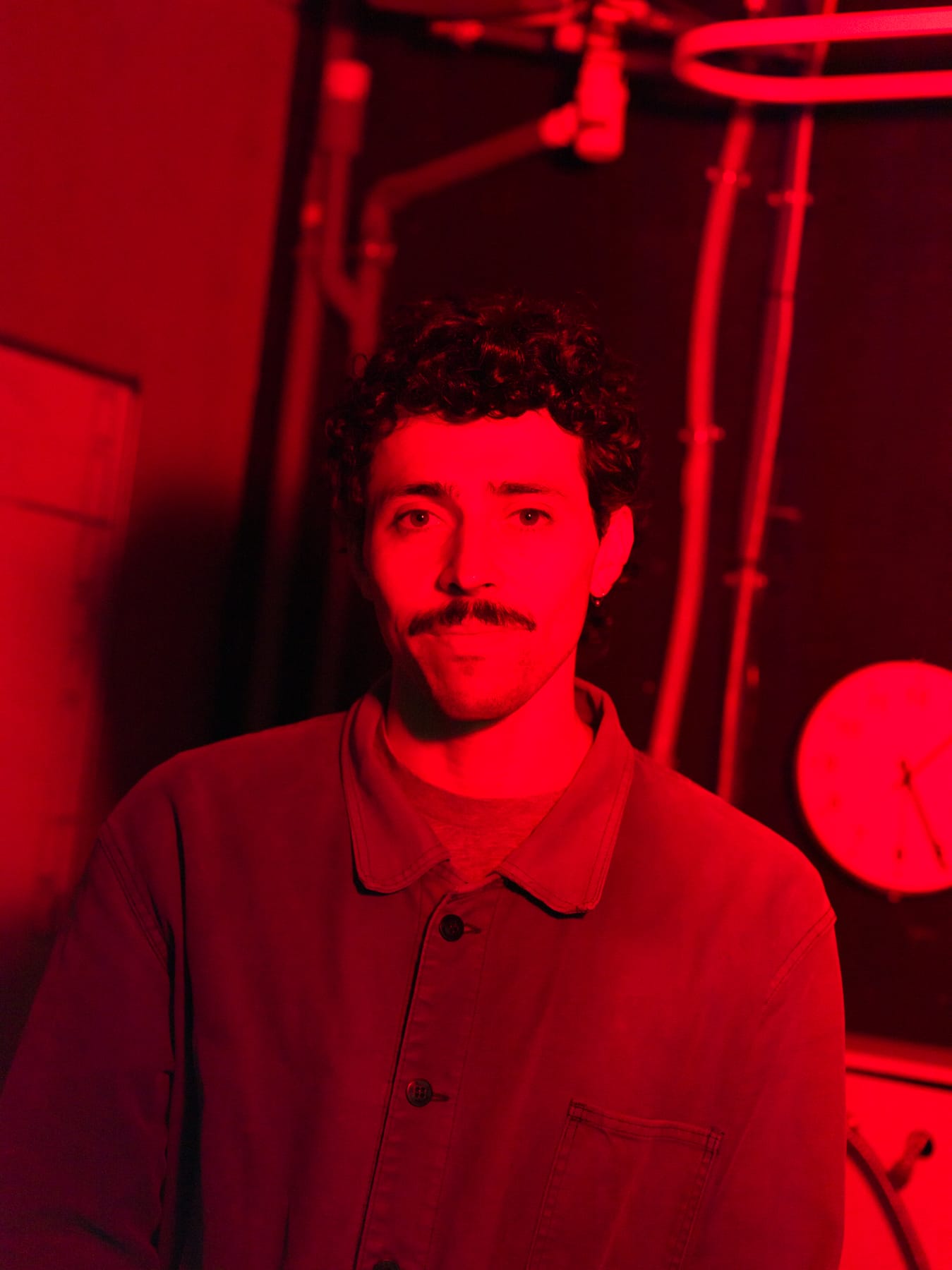
From The Archive: অঙ্গার AWNGAR by Sarker Protick
From the Archive highlights previous writings on photography from Foam Magazine to cast light on current topics and ongoing debates in the world of photography and beyond.
To engage photographically with the world is to fulfil a need to understand and know the world, helping define one's place within it. This is an inherent sensibility we photographers possess, often without really even acknowledging it. Sarker Protick's relationship to his immediate world comes from such a motivation, amongst others. He has worked for some years now in his home country, Bangladesh; a relatively young nation with a rich and tumultuous history. As part of the Indian subcontinent known as the region of Bengal, once part of Eastern India, once ruled over by the British during its Empire, it was Partition in 1947 that led to its separation. Firstly, as East Pakistan, and after the 1971 uprising, as an autonomous Bangladesh.
Protick's recent work, in my mind, has taken two trajectories; one is experimental, abstract and sensorial, the other more rooted in a reflection of the region's socio-politics, its history, people and contemporary life. The latter trajectory has taken focus on infrastructures such as industry, waterways, architecture and railways. As the region was part of British conquest since the very beginnings of the Empire, there is a significant legacy leftover from the colonial era. As the control of this area has shifted between powers, the far-reaching implications on the lives of people both before and after Partition continues to haunt the nation in its postcolonial form.
In AWNGAR, Protick's lens seeks out the features and immediate environment of the East Bengal Railway which in this body of work, appears in a state of abandonment. The British, who in need of regional control and transportation of resources built and expanded the subcontinent's vast railway network and much of it is still there. Today, the railway stands as an example of both promise and neglect. Vital as a lifeline for transit and regional links, but shown here as defunct, derelict, succumbing to nature and the elements. It's not a project that seeks nostalgia or pines for reversal to a golden era, nor does it attempt to necessarily aestheticise the aged Victorian design of buildings, bridges and workshops that line the railway. Instead, Protick, through careful selection, meditates upon the significance of the region's history, acknowledging the country's colonial past and its attempts to recover as a modern, independent nation. Perhaps alluding to how the present signals a continued struggle regardless of an apparent freedom.
Protick points to this political turmoil with the railway as a metaphor. A visualisation that includes; redundant, imperial era heavy plant and machinery; dusty, antiquated features from a clearly bygone time; the dark, foreboding detail of the railway's bridges; overgrown train tracks that appear to no longer have a destination; the occasional glimpse of people that appear to be stuck in limbo. These images, indicating states of stasis hint at the discursive space of postcoloniality. A key image in the project, a stagnant, wood strewn, oily, black swamp implies suggestion of the colonial past leaving the postcolonial subject fragmented, stranded, unable to easily move beyond their current position. Stuck in the mud.
The colonial-era tool of photography does its best here. In the hands of Protick, it comes full circle in being employed to survey the aftereffects of colonialism. A nation etched out of imperial rule, the results of British departure and the chaotic outcomes of post-Partition. I have no doubt that Protick's 'need to know' comes from his awareness of how significant this past is and how important he feels it is for the present to somehow evolve beyond the ruination that befell the region. It is testament to how these histories continue to define the present and will likely define the future.
About the artist
SARKER PROTICK has developed a practice that combines the roles of image-maker, teacher and infrequently a curator. His works revolve around the subjects of impermanence, materiality of time and the metaphysical prospects of light and space. He is the recipient of Joop Swart Masterclass, Magnum Foundation Fund, Light Work Residency as well as World Press Photo Awards and has exhibited at Hamburg Triennale, Paris Photo and Dhaka Art summit among others. Protick is a faculty member of Pathshala South Asian Media Institute and Co-curator at Chobi Mela International Festival of Photography.
About the author
SUNIL SHAH is an artist and writer. He is a PhD candidate at Central St. Martins, University of the Arts London (UAL) researching art and exhibition histories with a particular focus on Okwul Enwezor's Documenta11 (2002). His work centres on visual document, photography, and archives with an interest in analysing their role in relation to postcolonial theory, political science, and Black studies. He is associate editor of American Suburb X, online visual culture platform.
All images from the series AWNGAR © Sarker Protick